Bathroom Fan Venting Into the Attic Is a Hidden Roof Killer
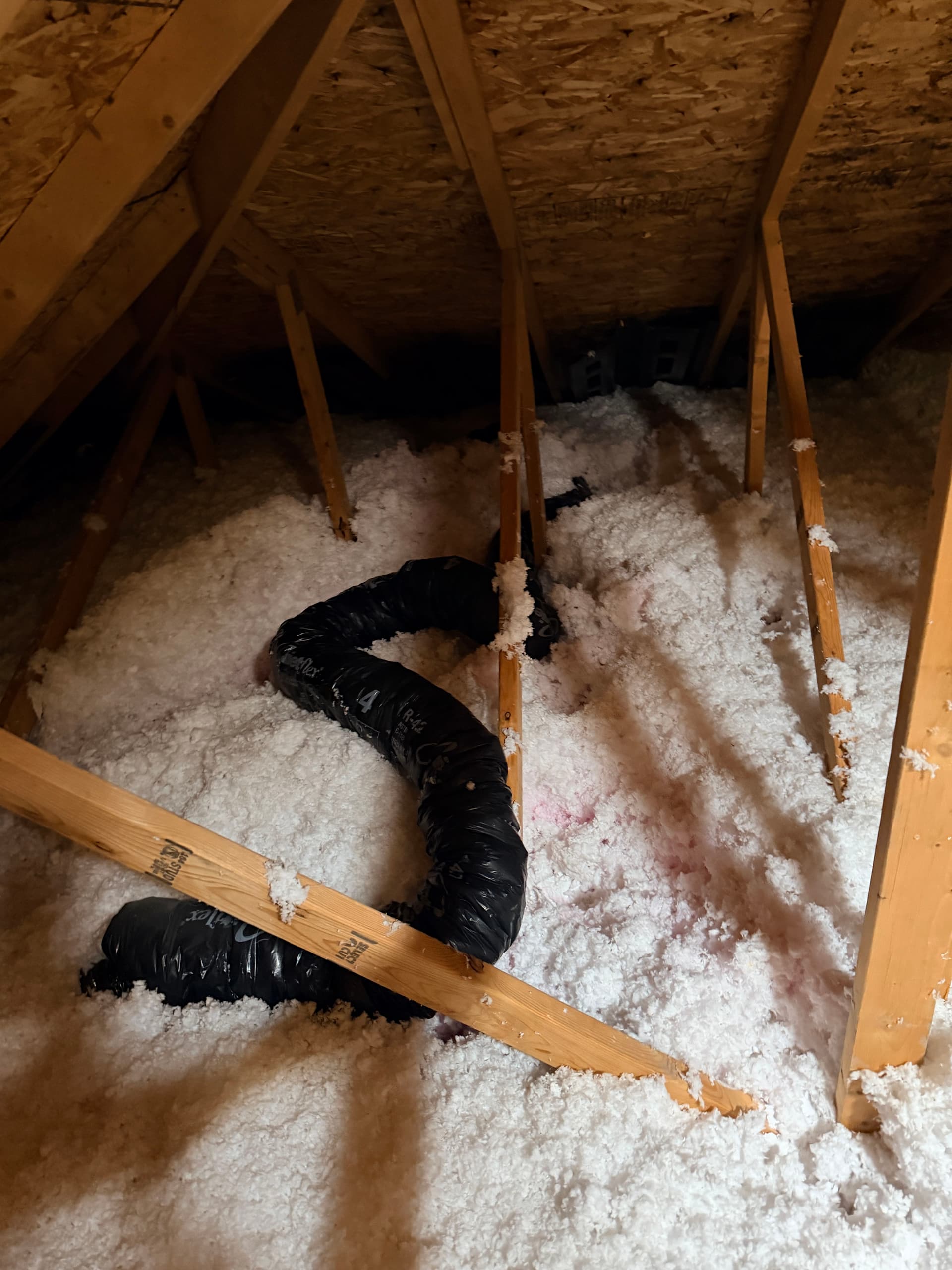
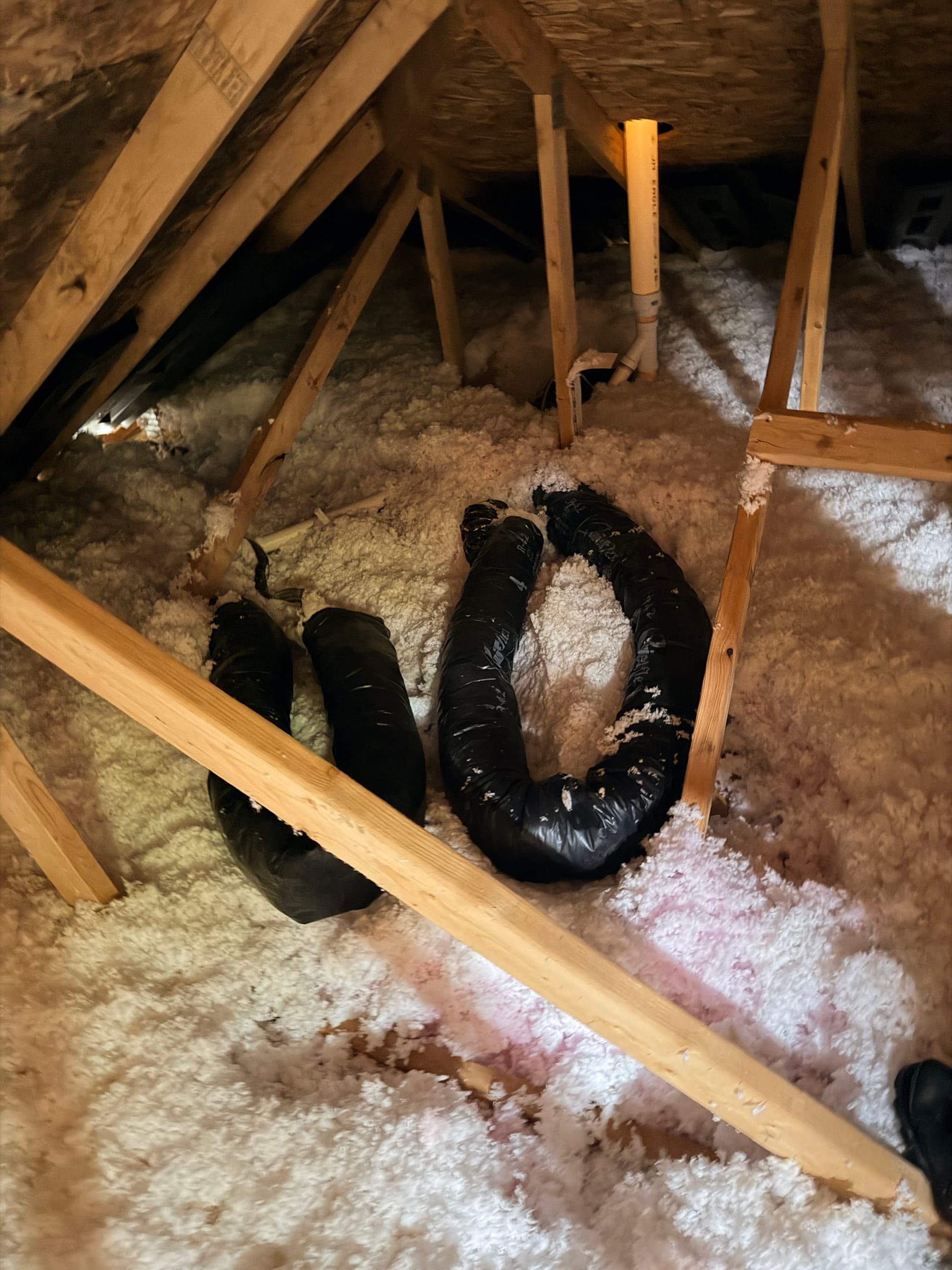
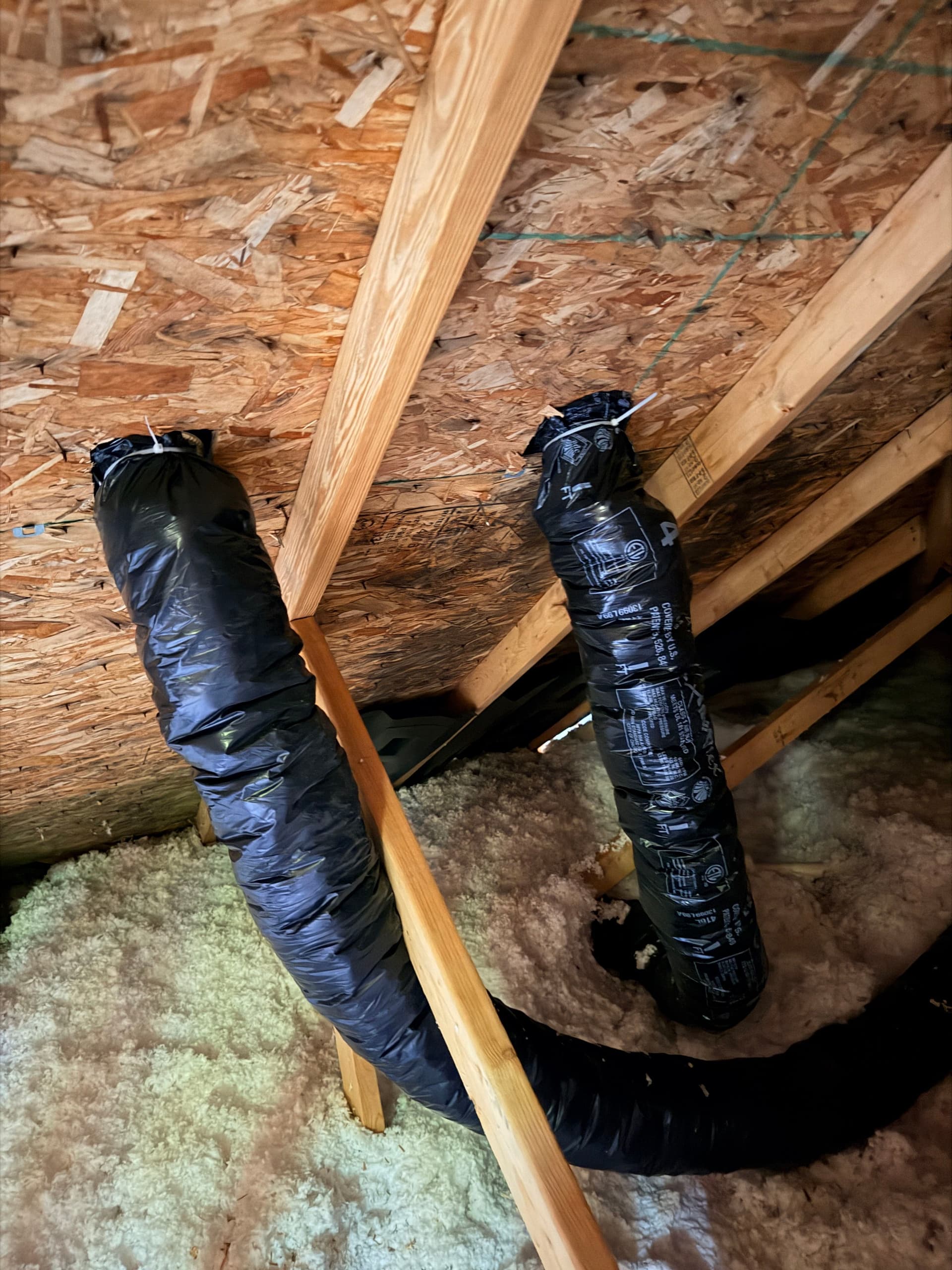
Most homeowners have no idea where their bathroom exhaust fans are actually venting. You flip the switch, the fan runs, and you assume the moisture is going somewhere safe. The reality? A lot of homes have those fans dumping warm, humid air straight into the attic - and that's where the trouble starts.
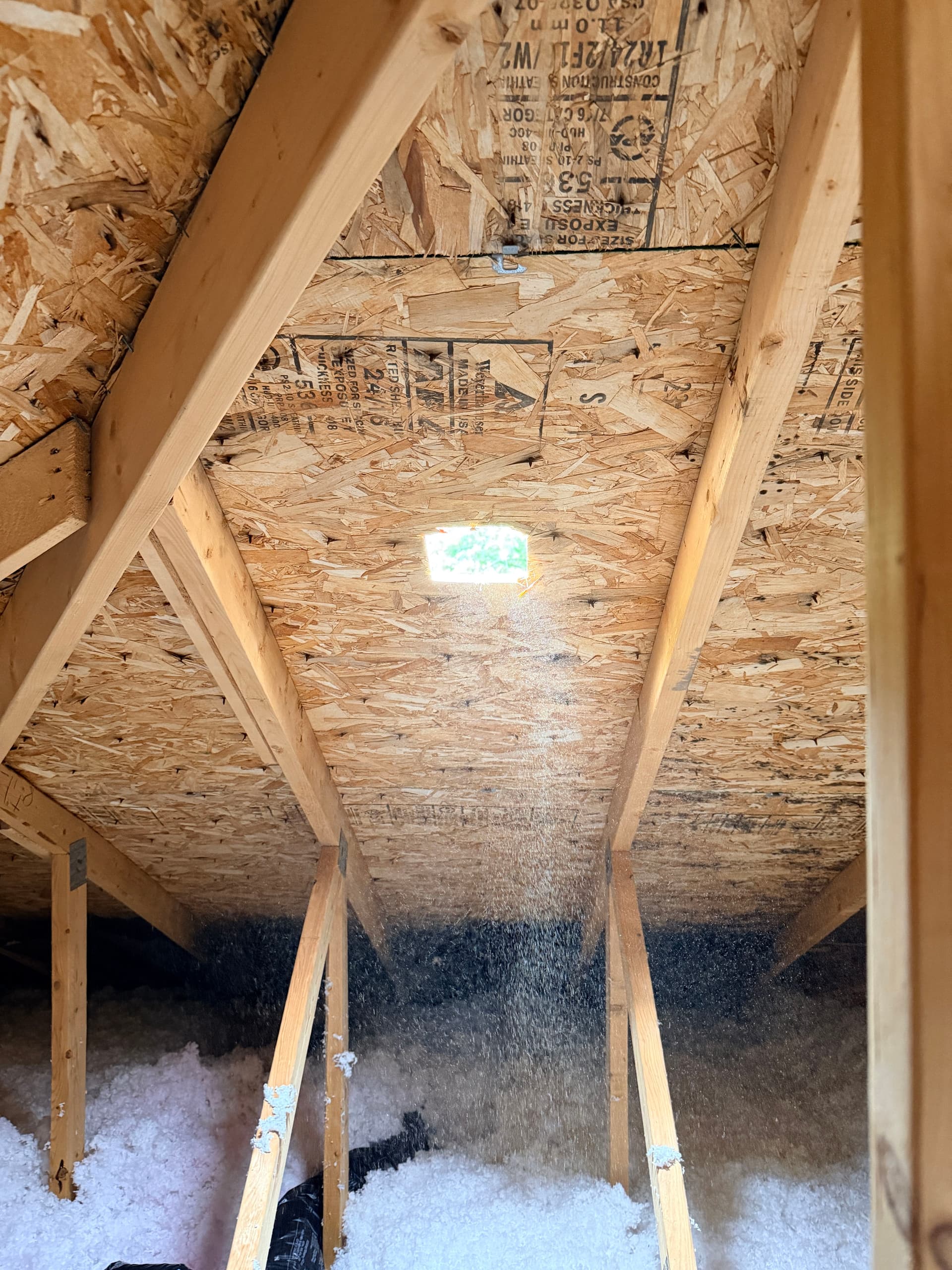
When moist air hits a cold attic space, it condenses. Over time, that moisture soaks into the roof decking, feeds mold growth, and quietly rots the wood structure from the inside out. By the time you notice a stain on the ceiling or a soft spot on the roof, the damage is already done. It's one of those problems that's completely preventable - but only if you catch it before it gets out of hand.
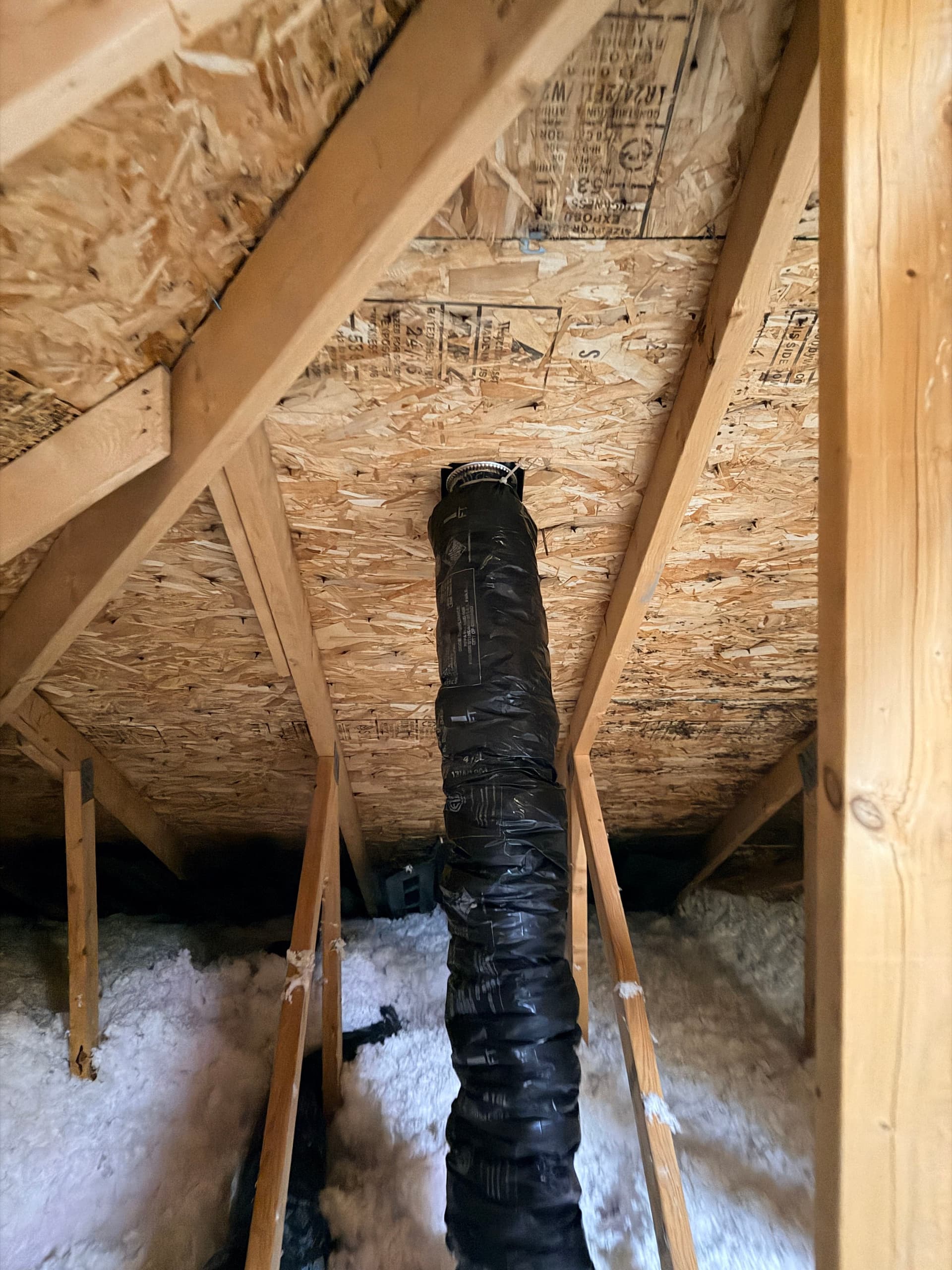
That's exactly what we corrected here. The bathroom vents were terminating inside the attic instead of exiting through the roof. We rerouted each one using insulated flexible ductwork and connected them properly through the roof deck with an exterior cap. The insulation on the ductwork matters too - it keeps the warm air from condensing inside the duct itself as it travels through the cooler attic space.
This kind of issue gets picked up during a thorough roof inspection. When we get into an attic, we're not just looking at the underside of the sheathing - we're checking how the space is being used, what's venting into it, and whether anything is setting the roof up for premature failure. A lot of the damage we see on roofs actually starts below the surface, and bathroom vents are one of the most common culprits.
If you're not sure where your bath fans are exhausting, it's worth finding out. It's a simple thing to check and an easy fix when caught early - but ignoring it can mean mold remediation, new decking, and potentially a full roof replacement down the road.